

Climate finance that works: supporting the women driving locally-led adaptation
From floods to wildfires, storms to droughts, the climate crisis is worsening. While the impacts are heavily felt across marginalised communities worldwide, women, girls, and gender-diverse people, especially those in the Global South, are disproportionately impacted. They often bear the brunt of environmental destruction while being excluded from the decision-making tables that set climate policy and financing.
At Mama Cash, we know that those closest to the crisis are also closest to the solutions. As the oldest international women’s fund, we resource grassroots feminist movements leading climate action. These movements create and implement innovative and sustainable solutions, yet they remain drastically underfunded.
Lessons from London Climate Week: Progress and Persistent Gaps
At this year’s London Climate Week, one message was clear: locally led action is fundamental to tackling the impacts of climate change. More panels and discussions than ever highlighted the need for adaptation strategy and funding mechanisms that centre local organisations and communities.
As part of the Global Alliance for Green and Gender Action (GAGGA), we co-hosted an event with the UK Foreign, Commonwealth & Development Office (FCDO) and the International Institute for Environment and Development (IIED) on locally led adaptation. Gerard Howe, FCDOs Head of Adaptation, Nature, and Resilience, spoke of ‘the rolling wave of momentum’ on locally-led adaptation, highlighting the UK government’s commitment to more and better-quality climate finance as well as alignment with development and humanitarian funding. At the Finance Resilience Summit session where we presented our new brief on the crucial role of intermediaries – specifically women’s and feminist funds – in supporting and strengthening locally led adaptation.
The week also offered space for solidarity building across movements. Conversations on climate justice were connected with women’s rights, reproductive justice, and human rights struggles, contributing to breaking down siloes and recognition that these issues are deeply intertwined.
And yet, a persistent problem remains: money is not reaching the movements that need it most. Despite the rhetoric of inclusion and localisation, climate finance still overwhelmingly flows to large institutions and corporations, bypassing grassroots organisations — including those led by women, Indigenous communities, and structurally excluded groups.
Why feminist movements matter for climate action
The evidence is clear: when feminist, women’s, and Indigenous groups have resources, they protect ecosystems, advance adaptation, and ensure community well-being. They challenge extractive models that drive climate breakdown, and instead build economies and societies rooted in care, justice, and sustainability.
Feminist organising tackles both the root causes of the climate crisis and the solutions. It confronts extractivism, inequality, and patriarchy while advancing alternatives such as community-based renewable energy, food sovereignty, and just transitions. Feminist groups don’t just mitigate damage — they develop and practice innovative ways to regenerate and build resilience.
This is why climate justice is inseparable from the fight for gender equality. Any approach that ignores gendered power dynamics cannot deliver truly sustainable climate solutions.
Bridging the financing gap
Despite their proven effectiveness, feminist movements remain chronically underfunded. Currently, less than 1% of all gender-focused aid goes to women’s rights organisations, and an even smaller fraction reaches grassroots groups in the Global South. Climate finance tells a similar story: despite rising commitments, restrictive donor requirements, short-term funding cycles, and bureaucratic barriers prevent resources from reaching where they are most transformative.
This creates a paradox: the groups with the greatest potential to deliver just and sustainable change are the ones with the least access to funding. Funds like Mama Cash play a crucial role in bridging this gap, moving resources directly and flexibly to grassroots feminist groups who are otherwise excluded from global climate finance structures.
It’s time to fund boldly and accelerate change
At Mama Cash, we fund in ways that trusts and amplifies the work led by feminist groups enabling climate leaders to set their own agendas and embed scale and sustainability in their work. We know it works, because we see the impact, progress and every day in the resilience and innovation of the movements we support. For example,
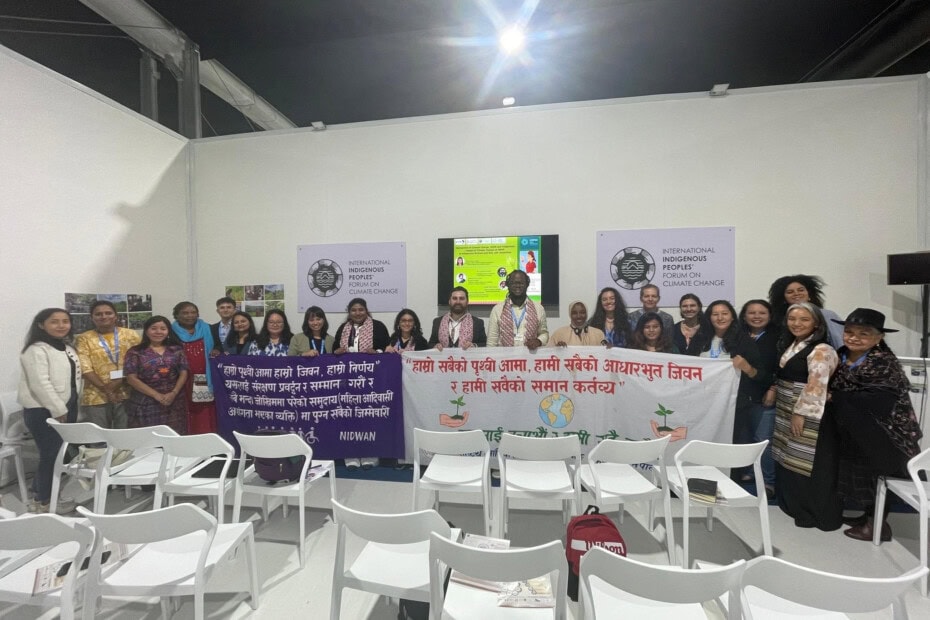
- In Nepal, NIDWAN works to bring the lived experiences and ground level evidence of Indigenous women with disabilities into international climate conversations through advocacy on global arenas like the 2024 UN Climate Change Conference.
- In Kenya women’s activism via the organisation Save Lamu led Kenya’s National Environmental Tribunal to issue an order halting the development of the proposed coal plant in the coastal town.
- In Mongolia, The Mongolian Women’s Fund (MONES) supported local women’s rights activists to mitigate the effects of a coal mine expansion by educating women about their rights and enabling them to obtain compensation from the local administration for forced resettlement.
Amid constant change, we remain unwavering in our commitment to invest in the very organisations and leaders that are shaping a future of progress and possibility.
There’s everything to gain at New York Climate Week
As the global climate community gathers this week for New York Climate Week, feminist movements are clear about what must be on the agenda:
- Gender-just climate finance that resources those most affected and on the frontlines of climate action
- Protection for environmental defenders risking their lives to safeguard land, water, and biodiversity.
- Centering voices of women and local organisations from the Global South, where communities are innovating transformative climate solutions
Mama Cash is there, connecting with donors, activists and decisionmakers advocate for visible and resourced women-led movements. From London to New York, climate weeks provide opportunity momentum to demand accountability and action when it comes to climate policies and funding, as we look forward to COP30 in Belem, Brazil this November.
High stakes and huge climate impact
If New York Climate Week is to deliver real progress, feminist movements must not only be heard — they must be funded.
Mama Cash invites donors, partners, and allies to stand with us. By listening to, funding and amplifying feminist climate action, we can shift the balance of power, strengthen communities, and build a future that is sustainable, just, and inclusive.
The stakes could not be higher. The solutions already exist in the hands of women-led movements. What remains is for the world to invest in them.